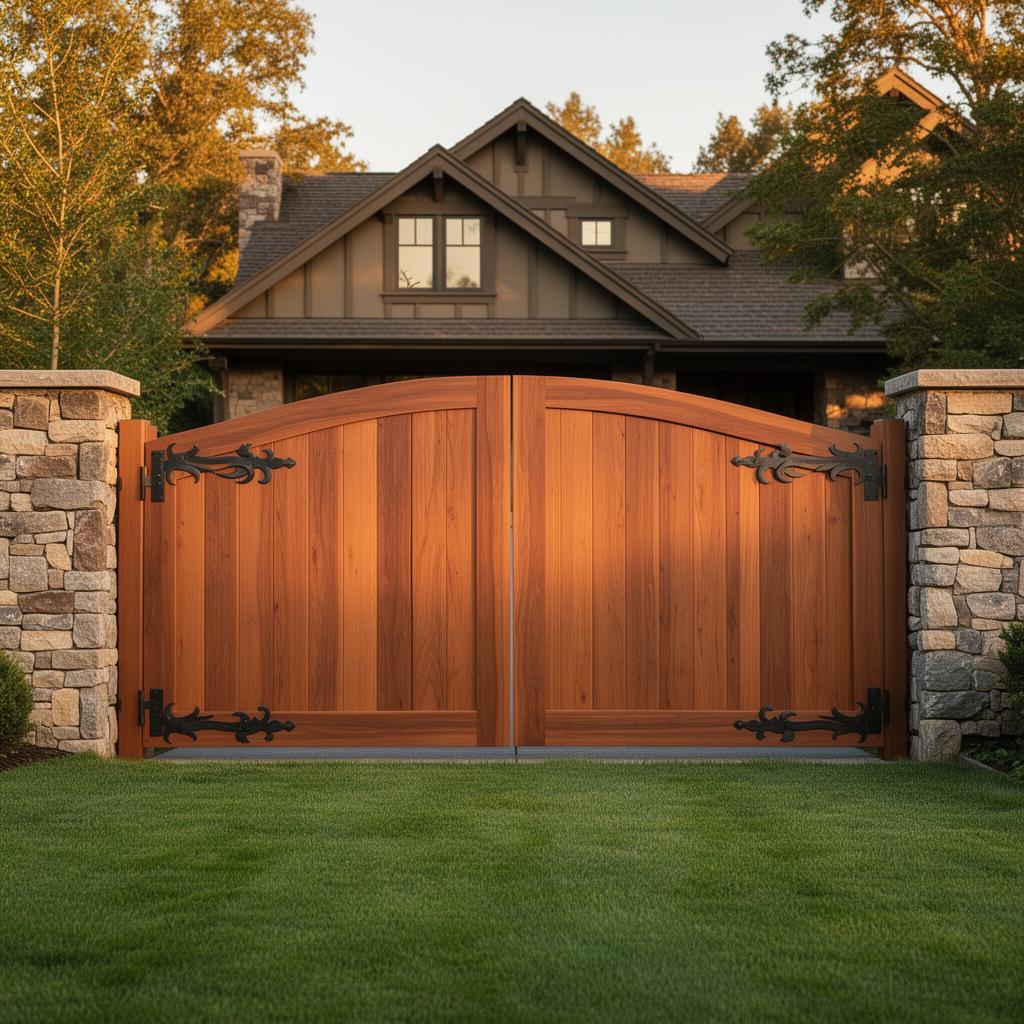
A gate is the single most-used part of any fence. You open and close it thousands of times across its life, and it is also the part most likely to fail first. Gates that sag, drop, or stick are almost always the result of undersized posts, light-duty hinges, or improper diagonal bracing — and once a gate starts dragging in your bermudagrass, it never stops on its own.
Done right, a gate should swing as smoothly at year ten as it did the day we hung it.
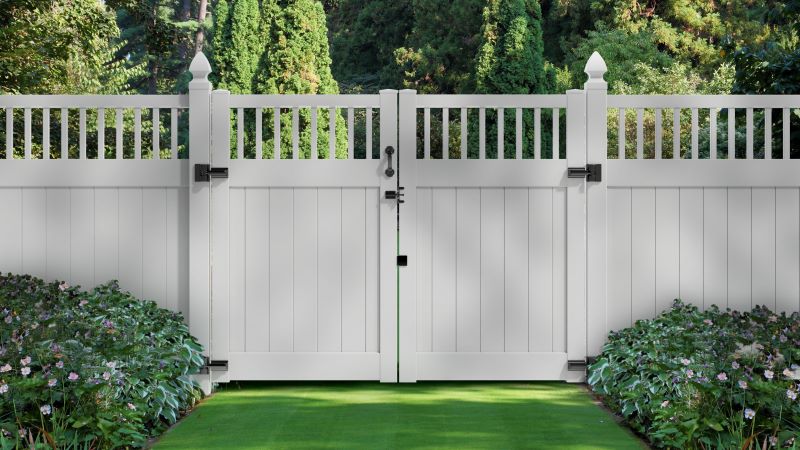
Gate Posts Carry the Whole Load — Build Them Bigger
Gate posts are the foundation of any gate that holds. A four-foot wide walk gate puts a moment load on the hinge post equivalent to about sixty pounds applied four feet from the post — a real cantilever force, not a theoretical one. The local contractors we work with use 6x6 pressure-treated or galvanized steel hinge posts on any gate over three feet wide, set forty-two inches deep in eighty pounds of concrete, with a sister post on heavy gates.
Light hinge posts are why your last gate sagged. Period.
Heavy-Duty Self-Closing Hinges, Not the Hardware Store Stuff
Hinge selection matters more than most homeowners realize. Standard light-duty T-hinges from a hardware store are rated for fifty to seventy-five pounds. A four-foot wide cedar gate weighs about sixty pounds new and eighty pounds after a season of Georgia humidity soaking into the lumber.
Light-duty hinges work for a year, then start to rack and drop the gate — the single most common reason homeowners call us for gate repair. Vetted contractors in our network use heavy-duty self-closing strap hinges from D&D Technologies and Lee Valley rated for two hundred plus pounds on every gate, even the small ones — the marginal cost is about forty dollars a gate and the difference is a decade of trouble-free swing.
Diagonal Bracing — The Reason Real Gates Stay Square
Diagonal bracing — a detail local pros in our network build into every new fence installation — is the third structural element. A gate is a rectangle, and rectangles want to become parallelograms under load. A diagonal cable or wood brace running from the bottom hinge corner to the top latch corner converts the rectangle into two triangles, which cannot deform.
Wood gates get a 2x4 wood brace; metal-frame gates get a turnbuckle cable. Local pros in our network install diagonal bracing on every gate. If the gate you have now drags after a season, almost guaranteed it does not have one.
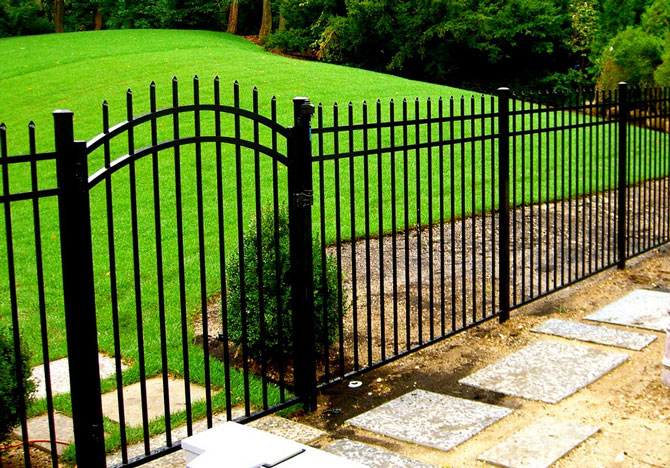
Drive Gates and Future Automation Prep
Drive gates — twelve to sixteen feet for vehicles — are a different category. Single-leaf drive gates over twelve feet need an industrial post and either a wheel at the latch corner or a cantilever roller. Double-leaf drive gates split the span and use a center cane bolt to drop into a concrete drop pad.
Contractors in our network install both styles, and we will rough in conduit and a pad for a future opener at no extra charge if you tell us at design time. Easier to do it now than to trench through your driveway later.
Recent Gate Installation Projects
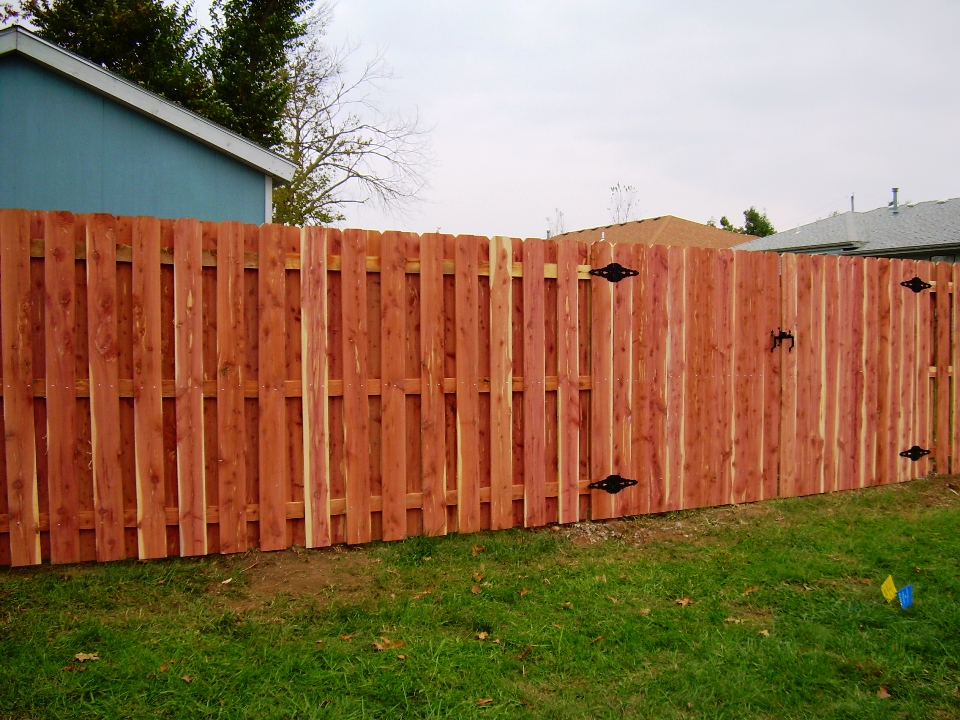
Hands-On Experience With Gate Installation
We were called in 2024 by a homeowner in Roswell to repair a five-foot pool gate that had dropped two inches and would no longer self-close. The original install used standard T-hinges and a 4x4 wood post. A contractor in our network replaced the post with a galvanized steel sleeve, installed Lokk-Latch self-closing hinges with adjustable tension, and re-hung the gate.
Three years later, the gate still self-closes from any open position. Pool inspectors across Sandy Springs and Johns Creek require self-closure from any angle — and light-duty hardware fails that test within eighteen months without exception.
Craftsmanship & Quality Standards
Self-closing pool gate hardware is governed by IBC and local pool code, which requires the gate to close from a still position with no human assistance from any angle of opening up to ninety degrees. The hardware must also self-latch. D&D Technologies' MagnaLatch and TruClose hinges are the industry standard for code compliance — they use spring tension and magnetic latching to meet both requirements.
Hardware-store hinges and gravity latches do not meet code and will fail inspection. Vetted contractors in our network carry the right hardware on every truck so the gate passes the first time.
Why Homeowners Choose Our Gate Installation
6x6 or steel hinge posts on all gates
Set 42 inches deep, in 80 lb of concrete, with sister post on heavy gates.
Heavy-duty self-closing hardware
200 lb-rated strap hinges; D&D MagnaLatch on pool gates.
Diagonal bracing standard
Wood or cable brace on every gate — no exceptions.
Drive gate options
Single-leaf cantilever, double-leaf with cane bolt, automation prep available.
Pool code compliance
Self-closing, self-latching, latch-height-compliant hardware on all pool gates.
How We Install Your Gate Installation
- 1
Width, swing, and code review
Walk vs drive, in-swing vs out-swing, pool code requirements.
- 2
Post upgrade
6x6 or steel sleeve hinge post set 42 inches deep.
- 3
Frame construction and bracing
Square frame with diagonal brace; metal-frame gates with turnbuckle cable.
- 4
Hardware installation
Heavy-duty hinges and code-compliant latches as required.
- 5
Final adjustment and walk-through
Gate adjusted to swing freely, latch alignment verified.
Licensing, Insurance & Credentials
All of our contractors are licensed and insured, with pool-code installs inspected by jurisdiction inspectors on every job that requires it. Installing gates since 2020.
Gate Installation Questions, Answered
Why does my gate sag?
Almost always one of three causes: undersized hinge post, light-duty hinges, or no diagonal brace. Sometimes all three.
How wide can a single gate be?
Standard walk gate is 3 to 4 feet. The local contractors we work with install single gates up to 6 feet, but recommend a wheel or cantilever roller above 5 feet.
Do pool gates need special hardware?
Yes — self-closing, self-latching, with the latch at least 54 inches above grade. Vetted contractors in our network install code-compliant hardware on every pool gate.
Can you automate my gate?
We do not install full openers, but we can rough in conduit and a concrete pad so that an automation contractor can add an opener later without trenching.
How long should a gate last?
A properly built gate with heavy-duty hinges should swing freely for the life of the fence. Hinges may need adjustment every 3 to 5 years; complete rebuilds are rare.