
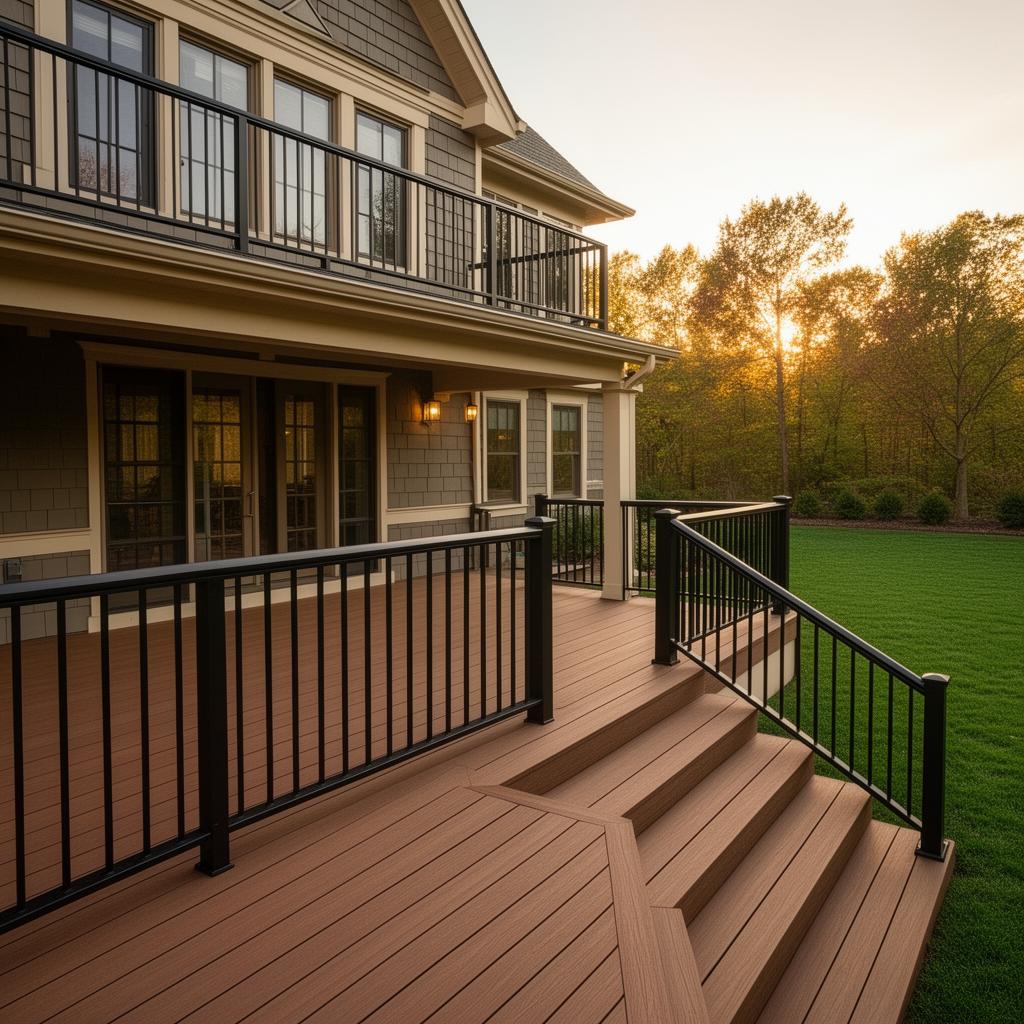
A deck is one of the few residential structures where one missed detail is the difference between a twenty-five-year build and a structural failure on a Saturday cookout. Ledgers that pull off the house, joists that span beyond their lumber rating, footings poured shallow and pushed up by frost — the work that disappears under the decking is the work that determines how long this thing stands. Vetted contractors in our network build every deck around protecting you from those failure modes, and we do not cut the corners that other crews count on you not knowing about.
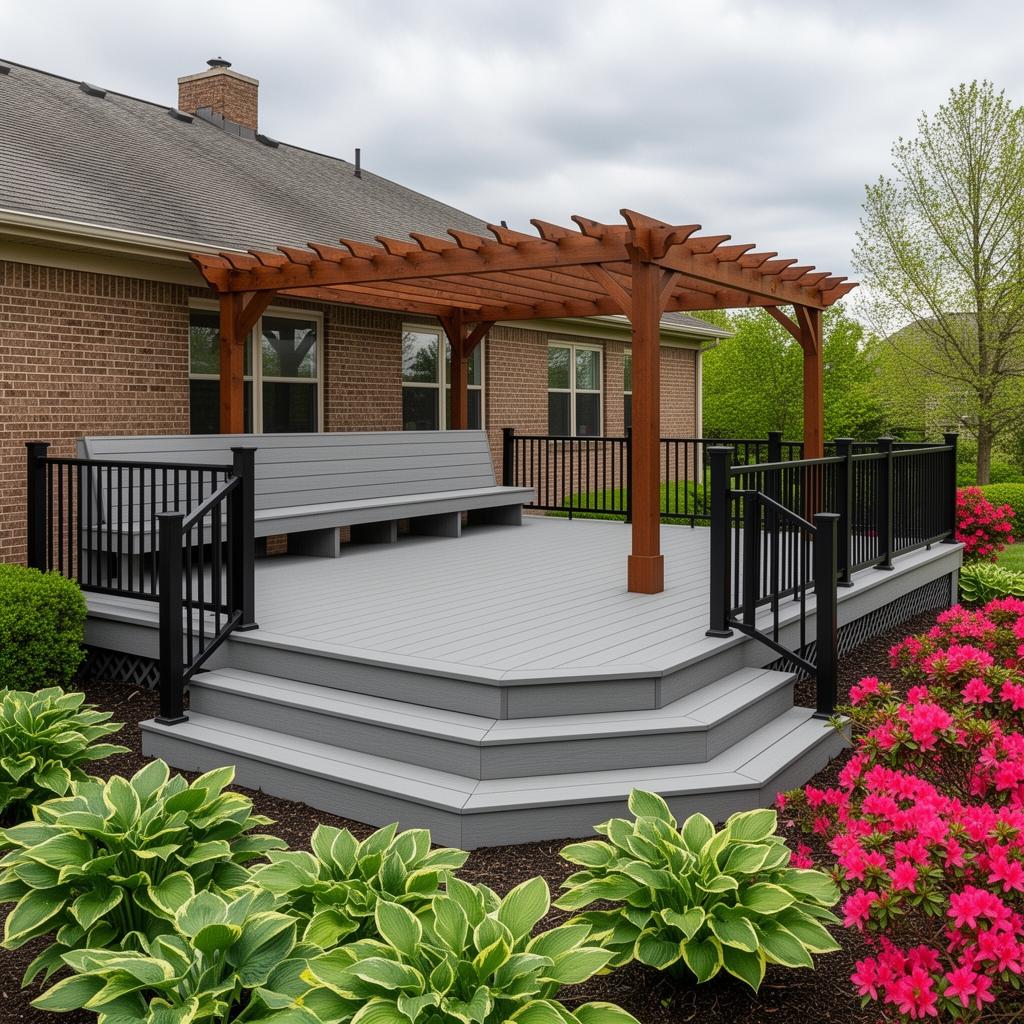
Bell Footings Below Frost — The Real Foundation
Every deck starts with a real footing plan. The contractor we match you with pour every footing below frost depth, in poured-in-place concrete, and we let them cure before any framing goes up. Surface-set deck blocks have no place on a deck attached to a house, and we will not bid a job that uses them — which is also why our most common deck replacement calls start with pulling out a deck someone else built that way.
That alone puts our quotes higher than some of what is out there, and we will not move on it. Your kids are going to be jumping on this thing in five years. The footings need to be there.
The Ledger Is Where Decks Fail — We Flash Every One
The ledger is the most important detail on any house-attached deck, and it is also the most often abused. We attach every ledger with structural fasteners — never deck screws — at the spacing the code calls for, and we flash the top with z-flashing tucked under the siding before any joist touches it. Almost every deck collapse you read about in the trade press traces back to a ledger that was nailed instead of bolted, or flashed with nothing.
There is a reason every deck-collapse story makes the news. We do not give you that story.
Framing With Simpson Hangers and Manufacturer Nails
Framing happens after the ledger is in. We size every joist to the actual span on the build, hang every joist with a code-rated steel connector, and use the manufacturer's specified nails through every hole on the connector. Drywall screws, deck screws, and toe-nails do not belong in a structural connection.
We do not use them on framing, and we will not patch in a job that did. Connectors are cheap. Doing it right takes minutes.
Skipping it puts the deck on a clock.
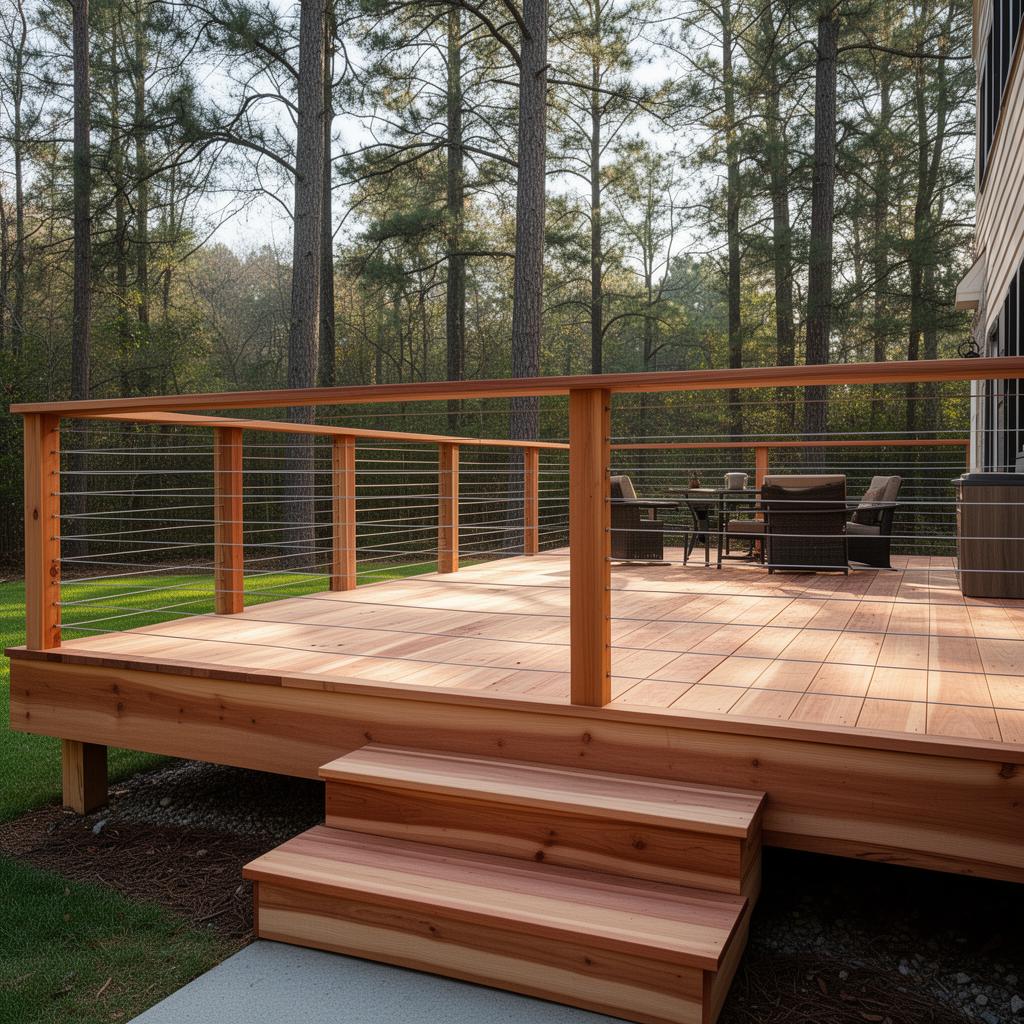
Decking Boards That Shed Water Instead of Holding It
Decking goes on after the framing passes our own walk-through. Hidden fasteners on cedar wood decks and composite decks, hot-dipped or stainless ring-shank on pressure-treated decks, board orientation that puts the cup of the wood in the right direction so it sheds water instead of pooling it. We hand-pick every board at the supplier and reject the ones with checks or loose knots before they ever come off the truck.
The decking is what you walk on every day. We treat it like the finish carpentry it is.
Railings, Stairs, and the Inspector Walk-Through
Railings, stairs, and finish details close out the build. The local contractors we work with set baluster spacing to current code, hold stair rise and run within the half-inch variance the code allows, and walk the inspector through the framing inspection ourselves. Then vetted contractors in our network walk the deck with you one more time, hand off the warranty card, and load the truck — the same close-out we run on every job from Roswell to Cumming.
The inspector signs off, you get a deck, and we do not see each other again until you ask us back to build the screened-in upgrade.
Recent Deck Installation Projects
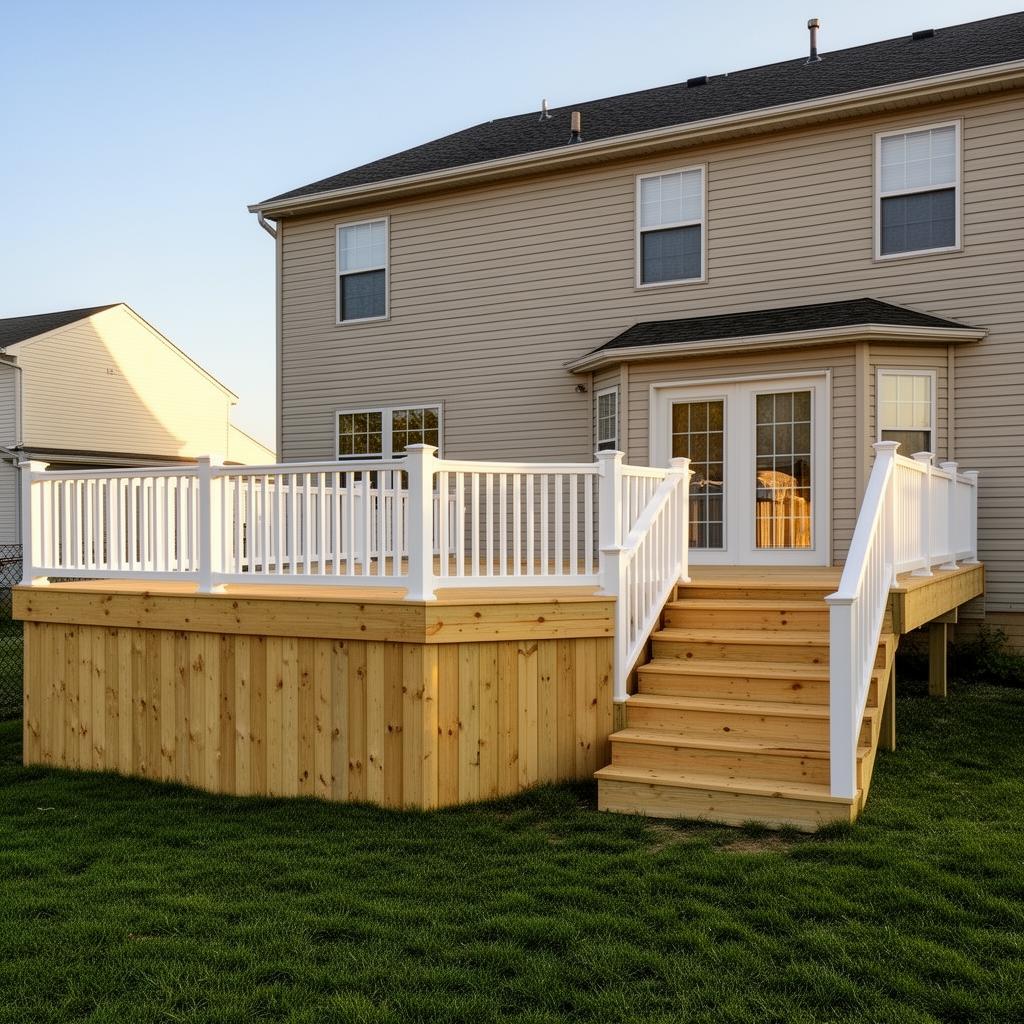
Hands-On Experience With Deck Installation
A contractor in our network rebuilt a twelve-by-sixteen deck on an Alpharetta lot a couple of years back that had been built by a previous owner using deck blocks set on top of grade. The deck had settled an inch in one corner, and the homeowner thought it was just an aesthetic problem. When we exposed the framing, the ledger had pulled three of its lag bolts and was hanging from two — one more cookout away from collapsing onto the basement walk-out below.
A contractor in our network rebuilt with proper bell footings, a structural-screw-attached ledger, z-flashing tucked under the siding, and Simpson hangers through every joist. That kind of find is exactly why we will not bid a deck without a real footing plan, and exactly why a cheap deck quote is never actually cheap.
Craftsmanship & Quality Standards
What the network handles not skip is what makes a deck last. Footings below frost line. Ledger flashed with z-flashing before any framing goes up.
Structural screws, not deck screws. Code-rated connectors with the right nails through every hole. Span sized to the lumber, not the lumber sized to whatever was on the truck.
None of those steps are fast, and none of them are exotic. They are just the difference between a deck that stands for a quarter century and one that ends up in a news article.
Why Homeowners Choose Our Deck Installation
Code-rated ledger attachment
Structural screws, proper spacing, z-flashing on every house-attached deck.
Joist sizing to span
We calculate and document the lumber size against the actual span — no guesswork.
Footings below frost line
24 to 36-inch poured-in-place concrete bell footings on every deck.
Simpson hangers and connectors
Manufacturer-spec nails through every hole. No drywall screws.
Permitted and inspected
We pull the building permit and walk the framing inspection on every build.
How We Install Your Deck Installation
- 1
Site visit and design
Walk the area, discuss size and material, sketch the footing layout.
- 2
Permit application
We pull the building permit and submit framing drawings where required.
- 3
Footings
Poured concrete below frost, allowed to cure before framing.
- 4
Framing and ledger
Ledger attached and flashed first; beams and joists installed with Simpson hangers.
- 5
Decking, railings, stairs
Material to spec; railings to 4-inch sphere code; stairs to rise/run code.
- 6
Final inspection and walk-through
Jurisdiction inspector walks the build; the contractor we match you with walk it with you afterward.
Licensing, Insurance & Credentials
All of our contractors are licensed and insured, have been building decks since 2020, and produce permitted-and-inspected work in every jurisdiction we serve.
Deck Installation Questions, Answered
Do I need a permit for a deck?
Almost always. Most jurisdictions require a permit for any deck attached to the house, and many require it for free-standing decks over 200 square feet. The contractor we match you with pull the permit.
Pressure-treated, cedar, or composite?
Pressure-treated is the cheapest at install but requires staining every 2 to 3 years. Cedar runs 25% more, looks better, and requires less maintenance. Composite costs 80% more up front and requires no maintenance for 25+ years.
How long does a deck install take?
A 200-square-foot deck typically takes 5 to 7 working days plus footing cure time. Larger or multi-level decks run 10 to 15 working days.
How long will a deck last?
Pressure-treated deck framing lasts 25 to 35 years if footings are sound. Decking surface life depends on material: pressure-treated 15 to 20 years, cedar 18 to 25 years, composite 25 to 30 years.
Will the deck need maintenance?
Wood decks need stain or sealer every 2 to 3 years and fastener checks annually. Composite decks need only a wash every year or two.