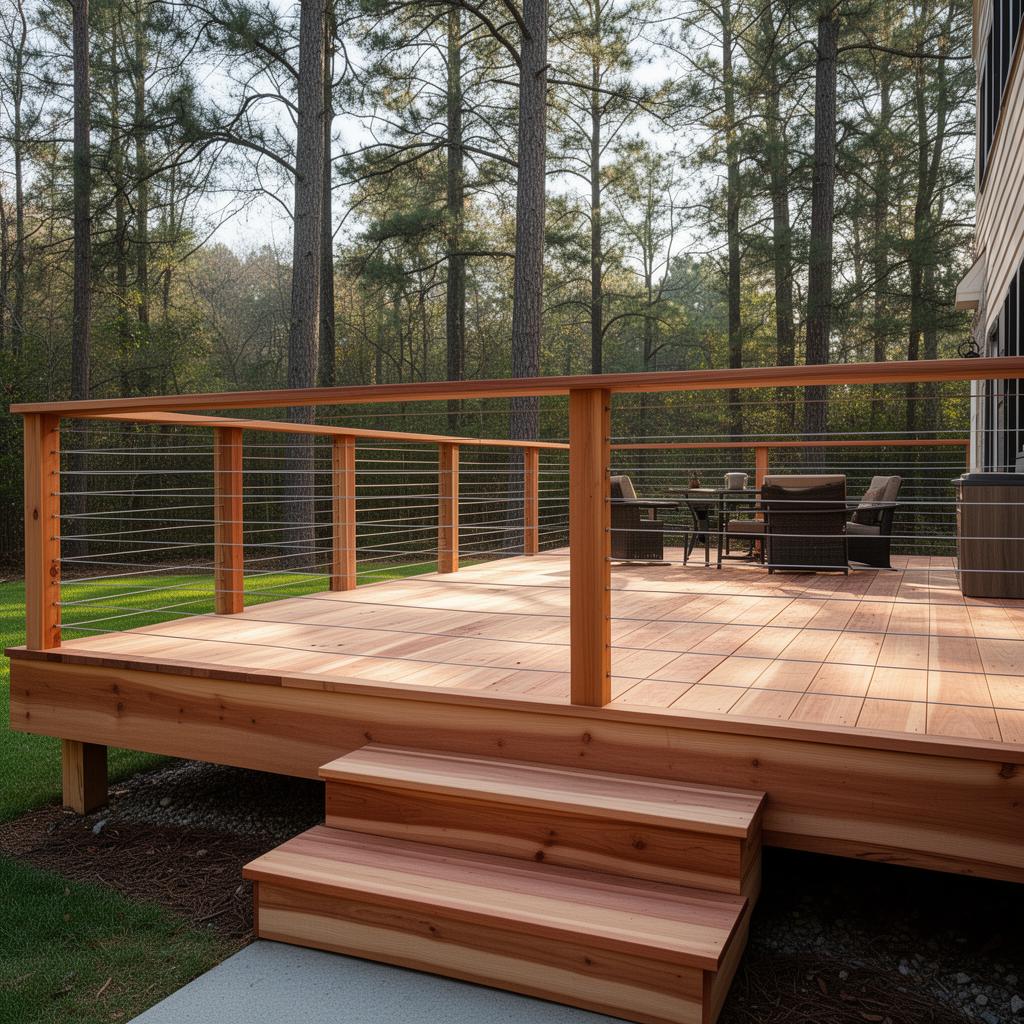
Wood is the original deck material, and it is still the best-looking surface money can buy when it is properly installed and maintained. The choice between pressure-treated southern yellow pine, western red cedar, and clear-grade redwood is mostly a budget and maintenance conversation. The choices that determine whether your deck lasts eight years or twenty-five happen below the surface — in the framing — and that is where we put the most care.
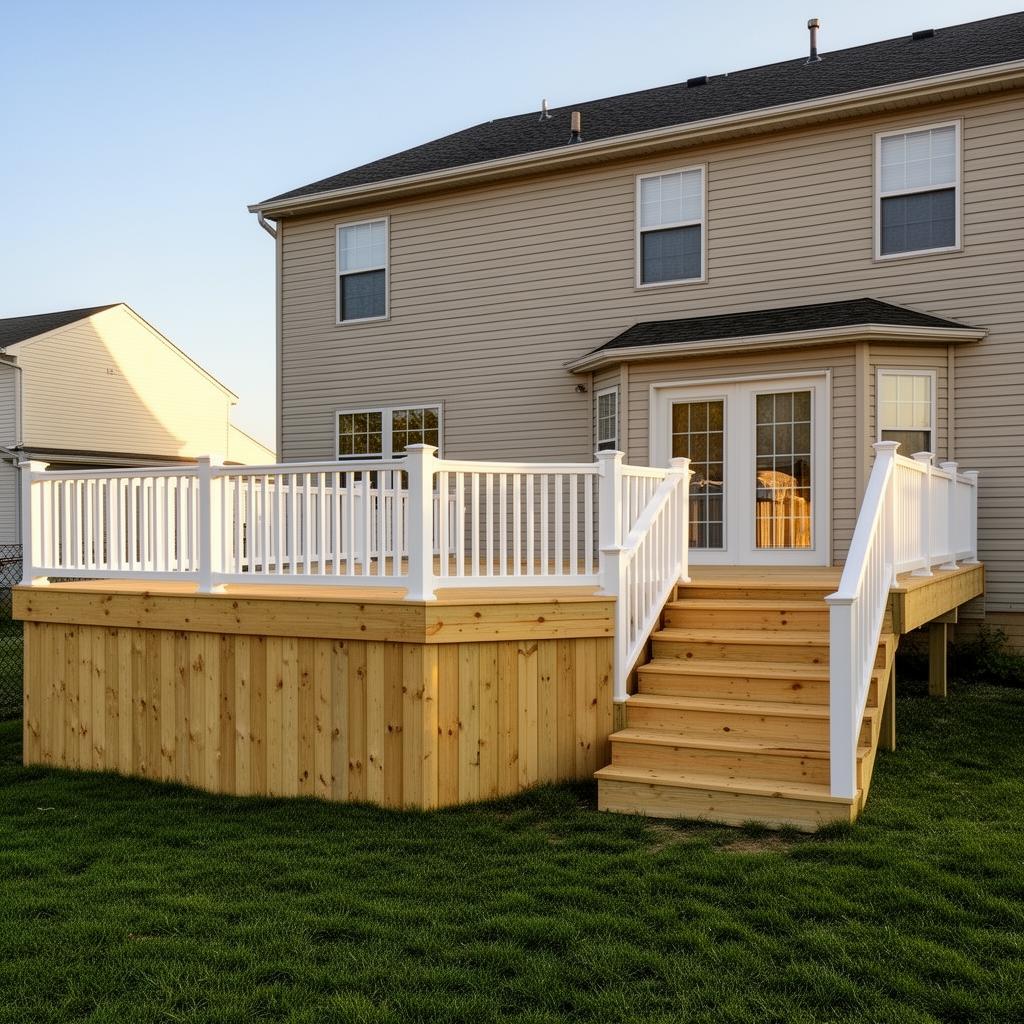
Pressure-Treated Pine — The Workhorse Wood Deck
Pressure-treated southern yellow pine is the workhorse of wood decking. It is treated with copper-based preservatives to resist rot and insects, costs about sixty percent of cedar, and accepts stain well after a four-to-eight-week dry-down period. The downside is movement.
Pressure-treated boards twist and check more than cedar, especially on flat-laid 5/4 deck boards. We mitigate the movement by using radius-edge profile decking, fastening with hidden fasteners or stainless ring-shank, and laying the boards bark-side-down to bias the cup against gravity. Done right, you get twenty years on a budget you can afford.
Western Red Cedar — The Sweet Spot
Western red cedar is the mid-grade option and what we recommend for most homeowners who can absorb a twenty-five to forty percent material cost increase over a budget pressure-treated build. Cedar is naturally rot-resistant — no chemical treatment needed — moves significantly less than pressure-treated, weathers more evenly, and accepts stain or clear sealer immediately. Cedar's downside is softness.
It dents under furniture and shows fingernail-deep scratches more easily than denser woods. Most of our cedar customers do not care, because the deck still looks fantastic at year fifteen.
Premium Redwood for the Splurge Build
Redwood is the premium option, mostly clear-grade product from California, and runs about double the cost of cedar. It is the most stable and longest-lived of the three. The contractor we match you with install it on roughly five percent of our wood decks — usually where the homeowner specifically requests it for the warm color and longevity.
If you have always wanted a redwood deck and the budget supports it, we will absolutely build it for you and you will not regret it.
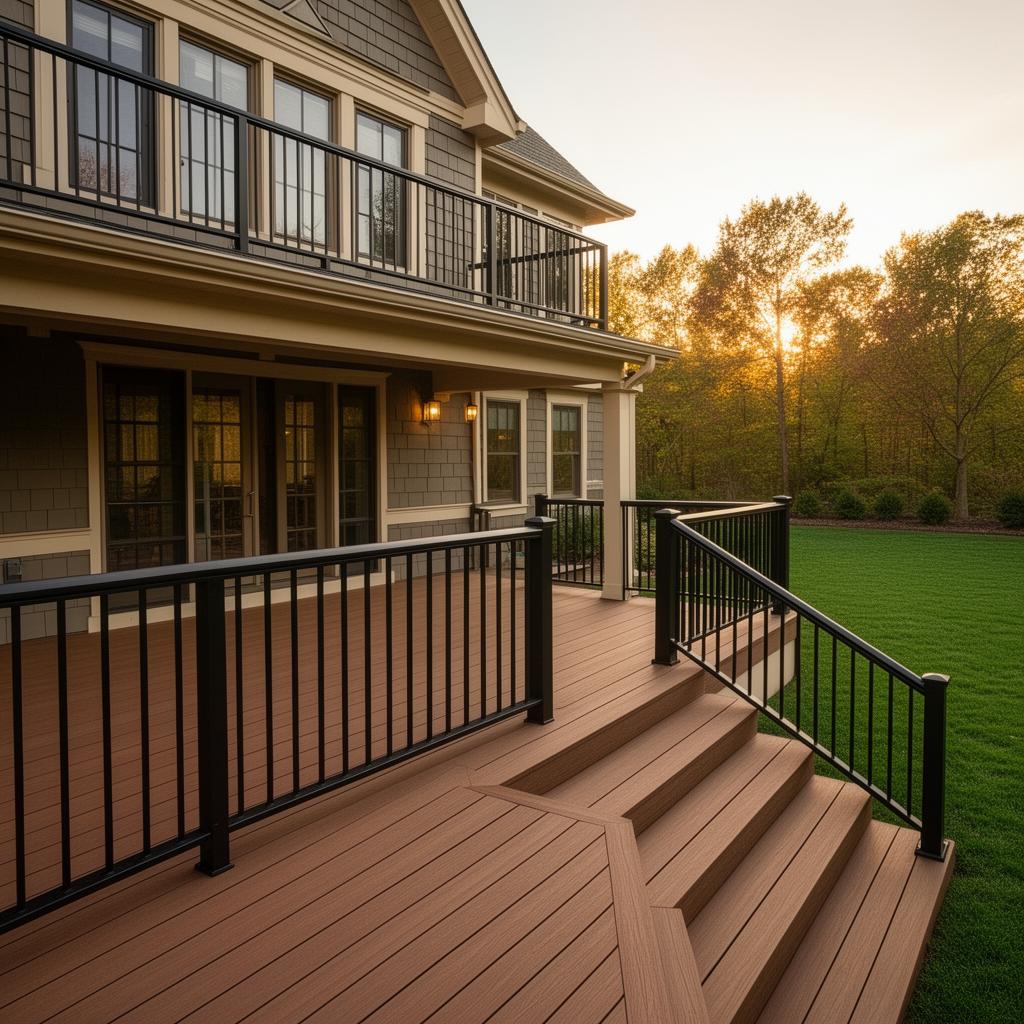
Hidden Fasteners vs Face Screws — The Look-or-Save Call
Fastening method is a bigger decision than most homeowners realize. Top-screwed deck boards (with the fastener visible from above) is the cheapest option but produces a face full of fastener heads that collect water and stain darker than the surrounding wood by year three. Hidden fasteners (Camo, Tiger Claw, or Eb-Ty systems) hide every fastener and produce a perfectly clean deck surface.
The labor cost is about thirty-five percent higher than top-screwing. The deck surface looks dramatically better. We default to hidden fasteners on cedar and redwood, and offer them as an upgrade on pressure-treated — and many homeowners weighing the maintenance commit instead step up to a composite deck.
Hands-On Experience With Wood Deck Installation
On a 16x20 cedar deck we built on a Johns Creek property in 2022, the homeowner was on the fence about hidden fasteners — about four hundred dollars in extra labor for the size of the deck. We talked through what the deck would look like at year three with face-screws stained darker around every fastener, and the homeowner went with hidden Camo fasteners. Three years later, the deck surface is still uniform and the homeowner has sent us two referrals on the strength of how the deck has held up.
The face-screw alternative would have been visually noisy by now and almost guaranteed she would have wished she had spent the money.
Craftsmanship & Quality Standards
Cup is the technical term for what wood does when one face dries faster than the other — the wet face shrinks less than the dry face and the board curves in cross-section. Bark-side-down installation puts the natural cupping bias in the right direction (concave-up, which sheds water through the gaps rather than pooling on the surface). Bark-side-up installation guarantees water pooling and faster decay.
The grain direction is visible on the end of every board — the rings curve away from the bark side. It is a five-second check that homeowners rarely know to ask about, and that crews rarely bother doing.
Why Homeowners Choose Our Wood Deck Installation
Hidden fasteners standard on cedar
Camo or Tiger Claw fastener systems on every cedar and redwood install.
Bark-side-down board orientation
Cupping bias works for the deck, not against it.
Grade selection at supplier pickup
We hand-select boards and reject any with edge checks or loose knots.
Stain prep guide included
Pressure-treated dry-down timing, cedar sealing recommendations.
Code-rated framing underneath
Same framing standards as our composite deck installs.
How We Install Your Wood Deck Installation
- 1
Wood species selection
Pressure-treated, cedar, or redwood with sample boards on site.
- 2
Permit and footings
Permitted, footings poured below frost line.
- 3
Framing
Ledger flashed and structural-screwed; joists hung with Simpson connectors.
- 4
Decking installation
Hidden fasteners on cedar and redwood; ring-shank stainless on pressure-treated.
- 5
Railings and stairs
Wood or wood-with-aluminum-baluster systems to code.
Licensing, Insurance & Credentials
All of our contractors are licensed and insured, members of the North American Deck and Railing Association, and have been building wood decks since 2020.
Wood Deck Installation Questions, Answered
Cedar vs pressure-treated for decks?
Cedar moves less, looks better, and lasts 18 to 25 years. Pressure-treated runs 25 to 40 percent cheaper and lasts 15 to 20 years. Both are valid choices.
How often do I need to stain a wood deck?
Pressure-treated needs stain every 2 to 3 years; cedar every 3 to 5 years. Clear sealer can extend cedar's natural look but does not last as long as pigmented stain.
Will the deck splinter?
Pressure-treated splinters more than cedar. We sand any rough boards at install. Annual sealer reduces splintering substantially.
Hidden fasteners or face screws?
Hidden fasteners cost about 35% more in labor and produce a dramatically cleaner deck surface. We default to hidden on cedar; offer both on pressure-treated.
Can a wood deck have a fire pit?
Yes, with a fire-rated mat or stone hearth pad under the pit. The contractor we match you with build deck framing rated for the static load of a stone pad if requested.