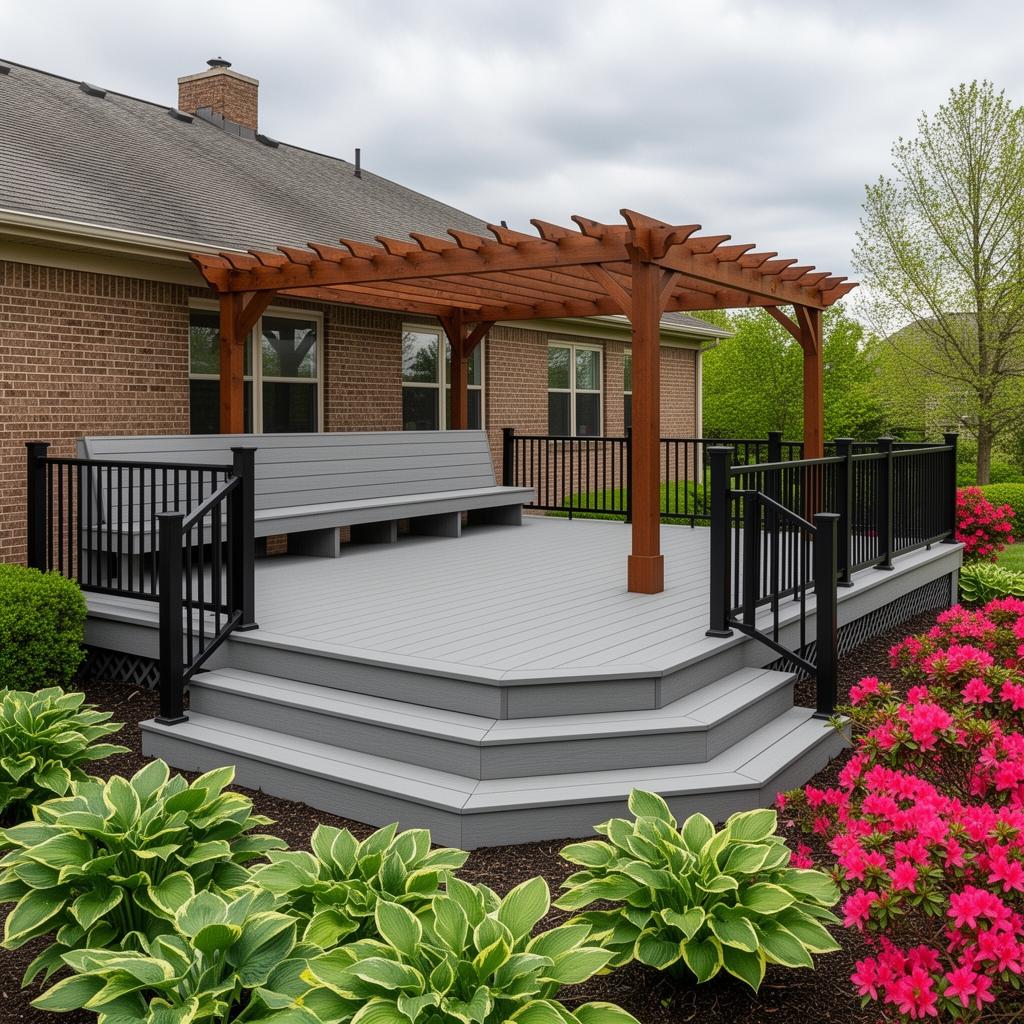
Deck building beyond the rectangular ground-level deck — multi-level builds, screened-in spaces, covered roofs, integrated lighting and outdoor kitchens — is where the real design work happens. The framing has to support whatever you want on top of it, the railings and stairs have to meet code through every transition, and the finished space has to feel like a deliberate part of the home rather than a tacked-on addition. This is the work we love most, and it shows up in the way the decks turn out.
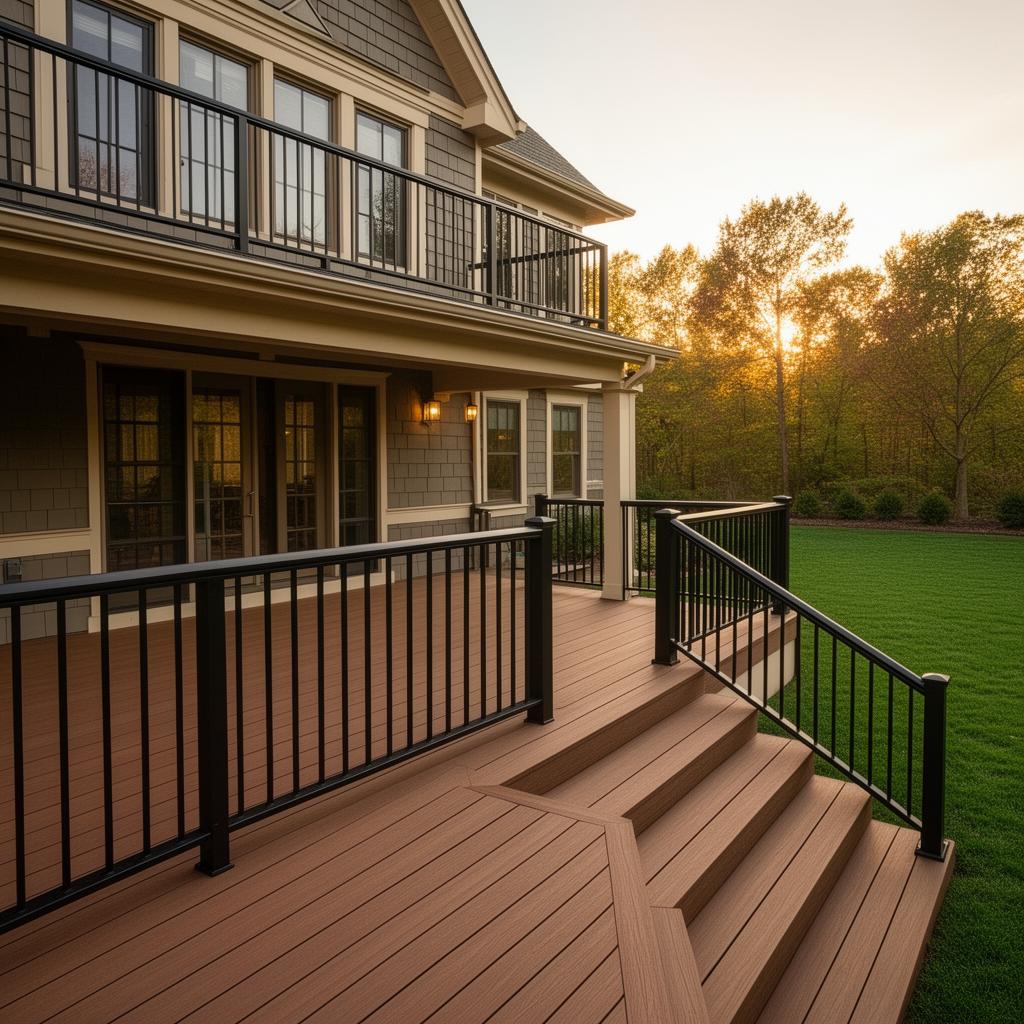
Two-Level Custom Decks That Read Like Architecture
Multi-level decks are the most common upgrade the contractor we match you with build over a basic deck installation. A two-level layout uses the upper deck for dining or grilling close to the house, with a lower platform eighteen to thirty-six inches down for lounging or fire-pit space. The transition between levels has to handle the IRC's stair geometry rules — seven-inch maximum rise, eleven-inch minimum tread, no more than three-eighths inch variance between adjacent treads.
Done right, the level transition reads as architectural intent rather than a stair fix.
Screened-In Decks That Beat the Mosquitoes
Screened-in deck builds — one of the most-requested upgrades on our Alpharetta and Roswell jobs — add a roof, screen panels, and a subfloor that handles the screen frame's wind load. The screen panels themselves are typically thirty-six to forty-eight inch wide aluminum-frame inserts, fastened to a perimeter wood frame integrated into the deck railing. Standard screen mesh handles mosquitoes; charcoal-fiberglass mesh provides better view-through; pet-resistant mesh is heavier-gauge for cat or dog claw resistance.
In Georgia, a screened deck is the difference between sitting outside in July and giving up by sunset.
Covered Decks and Roof Tie-In Done Right
Covered decks add a roof structure that ties into the existing house roof. The structural connection between the new roof and the existing house framing is the critical detail — we typically frame a ledger and rafters that bear on a ledger attached to the house wall, with proper flashing into the existing siding or stucco. Covered decks usually require an upgraded foundation footing for the additional roof load.
Done wrong, the tie-in leaks at the first hard rain. Done right, the tie-in is invisible and watertight for the life of the roof.
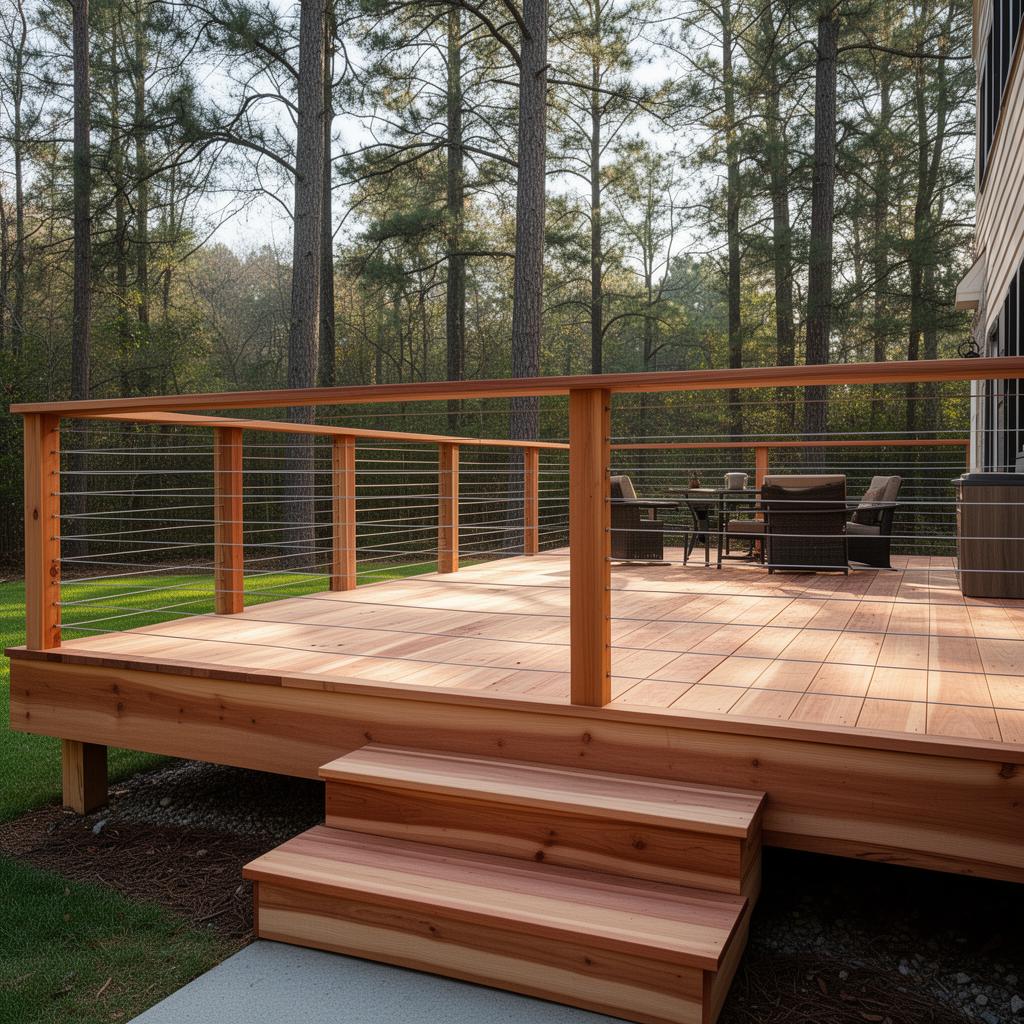
Outdoor Kitchens, Fire Pits, and Deck Lighting
Outdoor kitchens, fire pits, and integrated lighting — features that show up most often on composite deck builds and pool decks — all have load and clearance implications that affect the deck build. A built-in grill island typically loads two hundred to four hundred pounds of static weight on a four-by-four foot area. A stone fire pit pad runs two hundred to six hundred pounds.
Recessed deck lighting requires conduit roughed into the framing before the decking is laid. We discuss all of these on the design visit so the framing can be tightened where needed before any decking is installed.
Recent Deck Building Projects
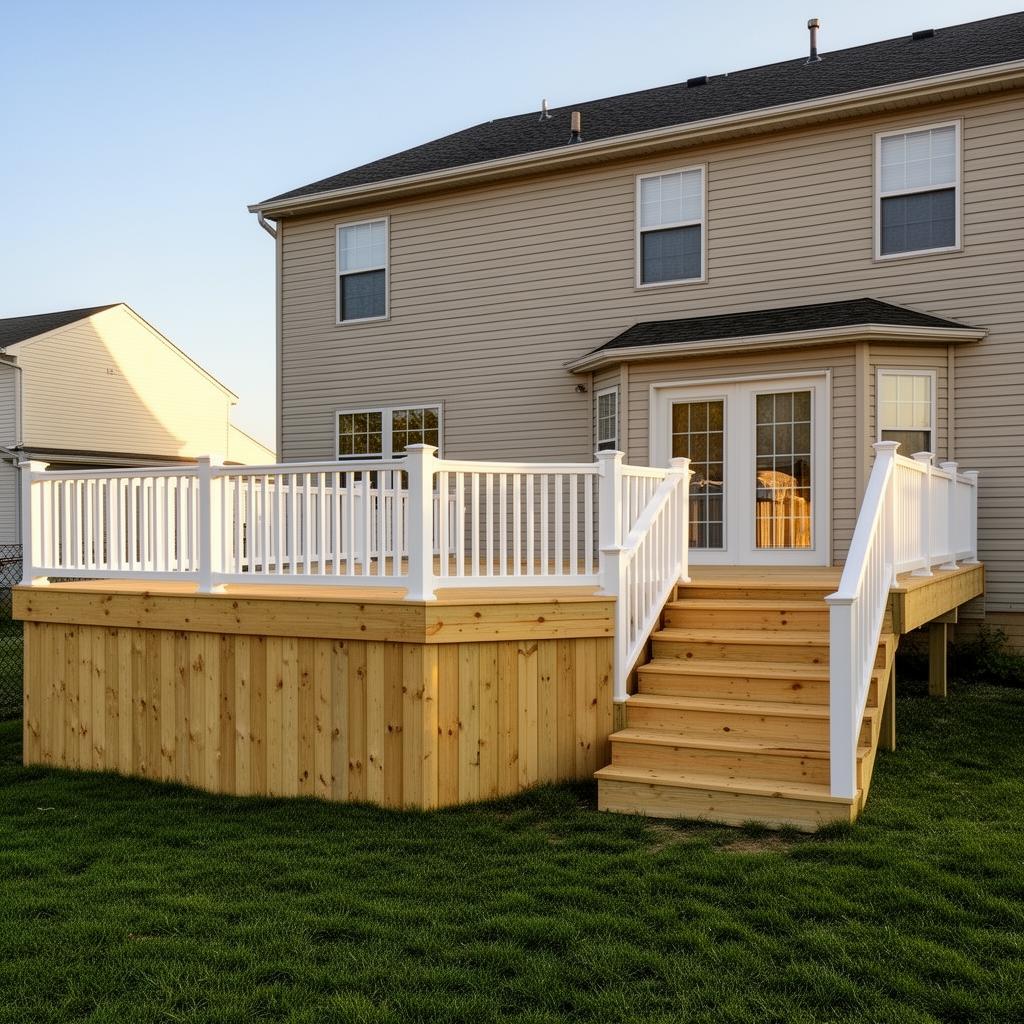
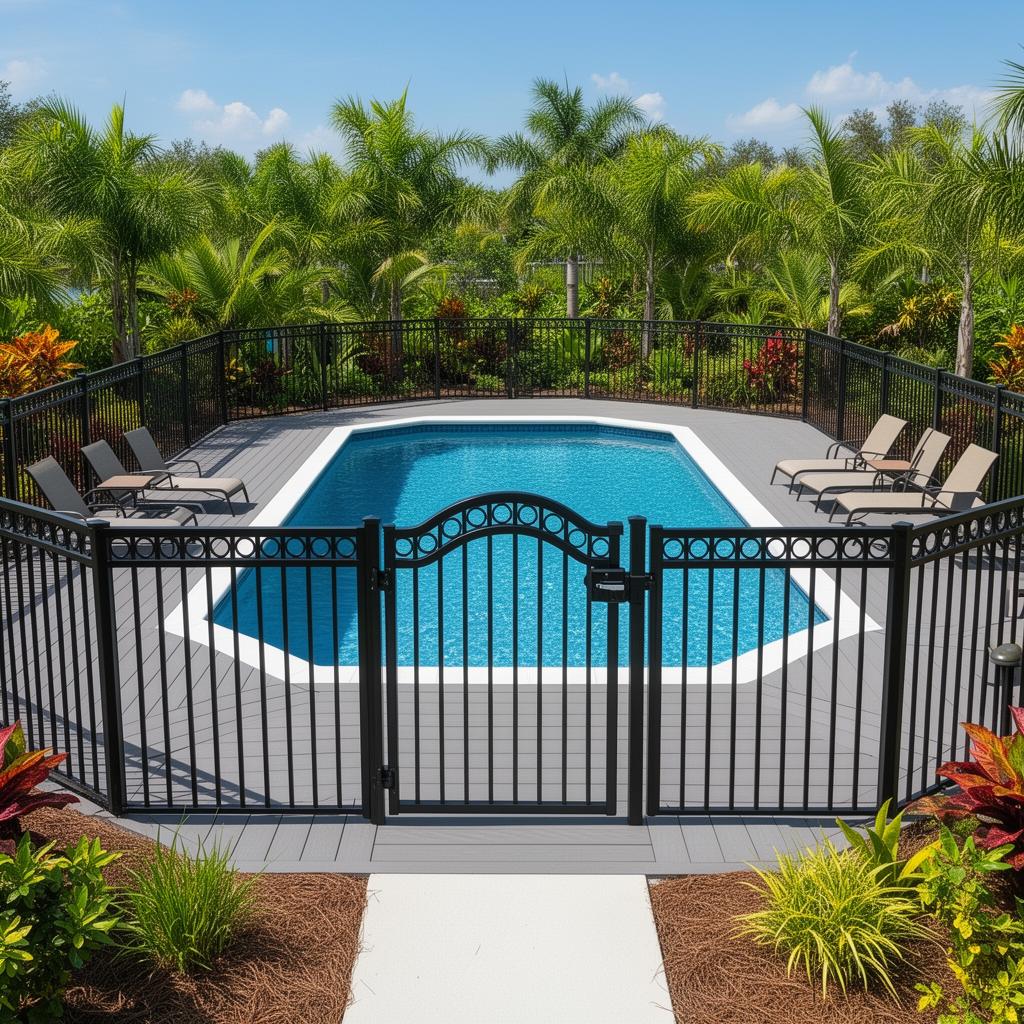
Hands-On Experience With Deck Building
We built a multi-level screened deck on a Milton property in 2024 with a 16x20 upper level (covered, with a roof tied into the existing house roof), a 12x14 lower platform open to the sky, and a stair transition between them. The homeowner had originally been quoted by a competitor for a single-level open deck. We re-designed at the homeowner's request after seeing inspiration photos, pulled the permit for the additional roof framing, and built the deck across about six weeks of working time.
The homeowner now uses the covered upper deck through every season, including January and August — which the original single-level open design would not have supported.
Craftsmanship & Quality Standards
Roof tie-in on a covered deck is a moisture-management problem more than a structural problem. The new deck-roof flashing must integrate with the existing house roof flashing in a way that does not interrupt the water shed pattern of the existing roof. We typically slot-cut the existing shingles or membrane, slide step-flashing under the existing courses, and re-bed the existing material over the new flashing.
Done wrong, the tie-in leaks at the first hard rain. Done right, the tie-in is invisible and watertight for the life of the roof.
Why Homeowners Choose Our Deck Building
Multi-level layout design
Stair geometry to IRC, level transitions that read as architectural.
Screened and covered build experience
Roof tie-in, screen-frame integration, and structural footing upgrades handled in-house.
Outdoor kitchen and fire pit framing
Joist-spacing tightened and beams sized for static loads.
Permitted and inspected on every build
Building permit pulled, framing and final inspections walked.
2-year workmanship warranty
Full warranty including any roof, screen, and lighting integration the local contractors we work with install.
How We Install Your Deck Building
- 1
Design visit
Concept sketch, footing layout, level transitions and any roof or screen tie-in detailed.
- 2
Permit application
Submitted with structural drawings for any covered or multi-level build.
- 3
Footings and framing
Footings poured below frost, framing sized to actual span and load.
- 4
Roof, screen, and electrical rough-in
Where applicable, before any decking is laid.
- 5
Decking, railings, and finish
Material selection, hidden fasteners, code-compliant railings and stairs.
Licensing, Insurance & Credentials
All of our contractors are licensed and insured, NADRA members, and have been building decks since 2020 with multi-level, screened, and covered builds in our regular portfolio.
Deck Building Questions, Answered
How long does a multi-level deck take?
4 to 8 weeks for a typical residential multi-level build with a roof or screen integration. Plain rectangular ground-level decks run 1 to 2 weeks.
Can you tie a roof into my existing house roof?
Yes. We integrate roof flashing into existing shingle or membrane systems. The tie-in is the most leak-prone detail on a covered deck and we treat it accordingly.
Is a screened deck warm enough in winter?
Screened only — not insulated — so it tracks the outdoor temperature. With a covered roof and a heater (gas or electric), screened decks are usable through most of the year in our climate.
Can I add an outdoor kitchen later?
Yes, but it is significantly easier to do in the original build. We can frame for the future load if you tell us at design time, then add the appliances and counters later.
Do you handle the electrical for deck lighting?
We rough-in conduit and boxes for low-voltage lighting; final wiring is handled by a licensed electrician we coordinate with on the build.