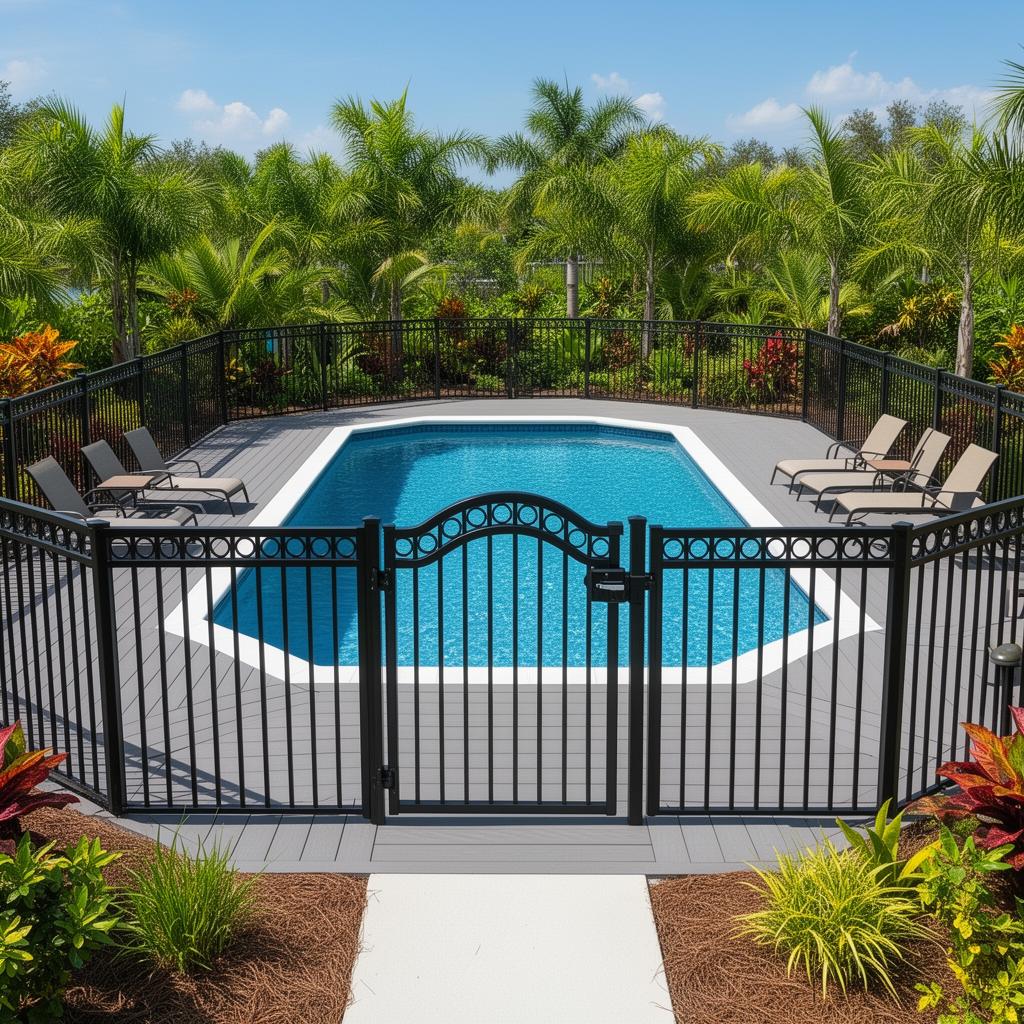
A pool deck is structural, slip-resistant, drainage-managed, and code-regulated all at once. The decking surface has to handle constant wet exposure without becoming a slip hazard or rotting at the pool edge. The framing has to handle the water load and resist the splash exposure that fails poorly built decks within a decade.
And the railing and gate hardware around the pool perimeter has to meet pool code — which is stricter than residential deck code in almost every detail. Contractors in our network build pool decks every season, we know the inspectors, and we pass on the first walk.
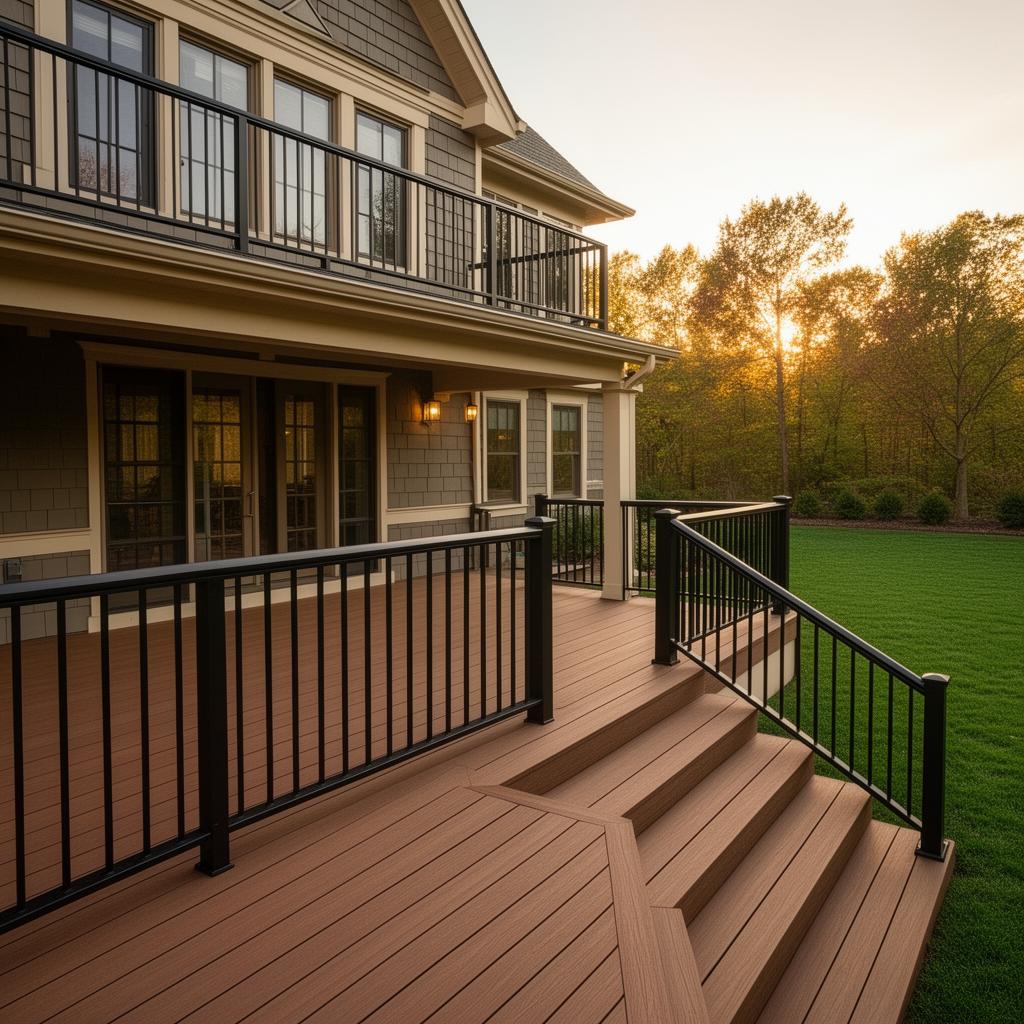
Slip-Resistant Decking Around a Wet Pool Edge
Surface material choice on a pool deck is a slip-resistance and heat conversation. Smooth-surface composite is the most slip-prone in our experience; textured-cap composite decking, particularly Trex Transcend, holds traction wet. Pressure-treated decking with a non-skid additive in the stain is also acceptable.
We do not install smooth-faced cedar around pools — wet cedar with sunscreen on it is genuinely dangerous. We will not put your kids on a deck we know is going to put them on the ground.
Heat Management on a Sun-Beaten Pool Deck
Heat is the second pool-deck consideration. Dark composite in full sun reaches 140 to 150 degrees Fahrenheit on a 90-degree day — too hot to stand on barefoot. Light-colored composite, light pressure-treated stain, or aluminum (rare on residential pool decks but common on commercial) all stay cooler.
We push lighter colors hard on pool deck installs even when the homeowner initially wants a dark accent. Your feet will thank you in July.
Drainage Slope That Keeps Water Off Your Framing
Drainage matters on pool decks more than on standard residential decks. Standing water at the pool edge promotes mold and accelerates fastener corrosion. Contractors in our network frame pool decks with a deliberate quarter-inch-per-foot slope away from the pool coping, and we ensure deck-board gaps are sized for fast drainage (typically 3/16 inch on composite, 1/4 inch on wood).
The slope is invisible to the eye and the difference between a five-year deck and a twenty-year deck.
Pool Barrier Code, Self-Closing Gates, and Inspector Walks
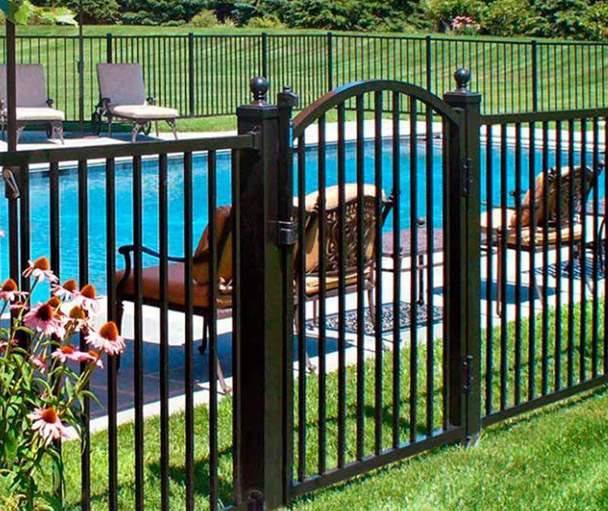
Pool barrier code drives the railing and gate decisions on the perimeter, and on the Sandy Springs and Johns Creek installs we do most often, every gate hardware choice is made to pass on the first inspection. Most jurisdictions require a continuous 4-foot minimum barrier around any in-ground pool, with self-closing self-latching gates and climbability restrictions on the railing. Where the deck itself forms part of the pool barrier, the deck railing must meet the same height and climbability requirements.
Local pros in our network install code-compliant aluminum perimeter railing — paired naturally with an aluminum pool fence where the deck does not form the full barrier — with D&D MagnaLatch gate hardware on every pool deck where applicable, and contractors in our network walk the inspection alongside you.
Hands-On Experience With Pool Deck Installation
We built an above-ground pool deck on a Cumming property in 2024 with a 6x16 entry section and a wraparound at the pool edge. The homeowner's original quote from another builder used dog-ear pressure-treated decking laid tight to the pool wall — which would have trapped pool water against the framing for the life of the deck. We rebid with a composite surface, an inch of clearance from the pool wall, and a sloped subframe.
Two summers later, no rot at the pool edge and no slip incidents. The original builder's quote would have rotted the rim within five years, and the homeowner would have been the one paying to find out.
Craftsmanship & Quality Standards
Pool barrier code on adopted IRC requires barriers to be at least forty-eight inches above grade, with vertical members spaced no more than four inches apart on the lower forty-five inches, and gates that self-close from any open position and self-latch with the latch at least fifty-four inches above grade. The deck railing, where it forms part of the barrier, must meet all of these dimensions. Code-compliance failure on pool barriers is the most common reason a pool deck fails inspection on first walk — and the local contractors we work with walk every pool deck inspection ourselves.
Why Homeowners Choose Our Pool Deck Installation
Slip-resistant surface options
Textured composite or non-skid-stained pressure-treated only.
Drainage-sloped framing
1/4-inch-per-foot slope away from the pool, drainage-sized board gaps.
Pool code compliance
Barrier height, baluster spacing, and gate hardware to current IRC.
Heat-conscious color selection
Lighter colors recommended for sun-exposed pool decks.
2-year workmanship warranty
Same warranty standards our network requires on every deck install.
How We Install Your Pool Deck Installation
- 1
Site visit and code review
Pool barrier requirements, drainage planning, layout sketch.
- 2
Permit and footings
Permit pulled, footings poured below frost.
- 3
Framing with drainage slope
1/4-inch-per-foot slope away from the pool.
- 4
Decking and perimeter railing
Slip-resistant surface, code-compliant railing height and baluster spacing.
- 5
Gate hardware and inspection
D&D MagnaLatch on pool barrier gates, jurisdiction inspector walks the build.
Licensing, Insurance & Credentials
All of our contractors are licensed and insured, NADRA members, and have been installing pool decks to current pool code since 2020.
Pool Deck Installation Questions, Answered
What deck surface is best for a pool?
Textured-cap composite (Trex Transcend, TimberTech AZEK) for low maintenance and slip resistance. Pressure-treated with non-skid stain is the budget alternative.
Will my pool deck need a permit?
Yes, almost always — both the deck itself and the pool barrier portion of it. Local pros in our network pull the permit and walk the inspection.
Can I have a hot tub on the deck?
Yes, with framing rated for the static load. Contractors in our network frame at 12-inch joist centers under hot tub locations and use larger beams as needed.
Is a dark deck color okay for a pool?
It works, but expect surface temperatures over 140°F in direct summer sun. We recommend lighter colors for barefoot comfort.
How is a pool deck different from a regular deck?
Drainage slope, slip-resistant surface, code-compliant barrier railing, and gate hardware. The framing standards are the same; the surface and railing details differ.