If you are getting quotes for a wood fence installation in Alpharetta, the first decision a fence contractor is going to walk you through is cedar versus pressure-treated pine. Both are good materials. Both have a place in north Atlanta backyards.
But they age differently, they price differently, and they belong in different situations. This is the same conversation our network has on every Alpharetta estimate — written down so you can think it through before the truck pulls up.
What an Alpharetta fence contractor actually installs
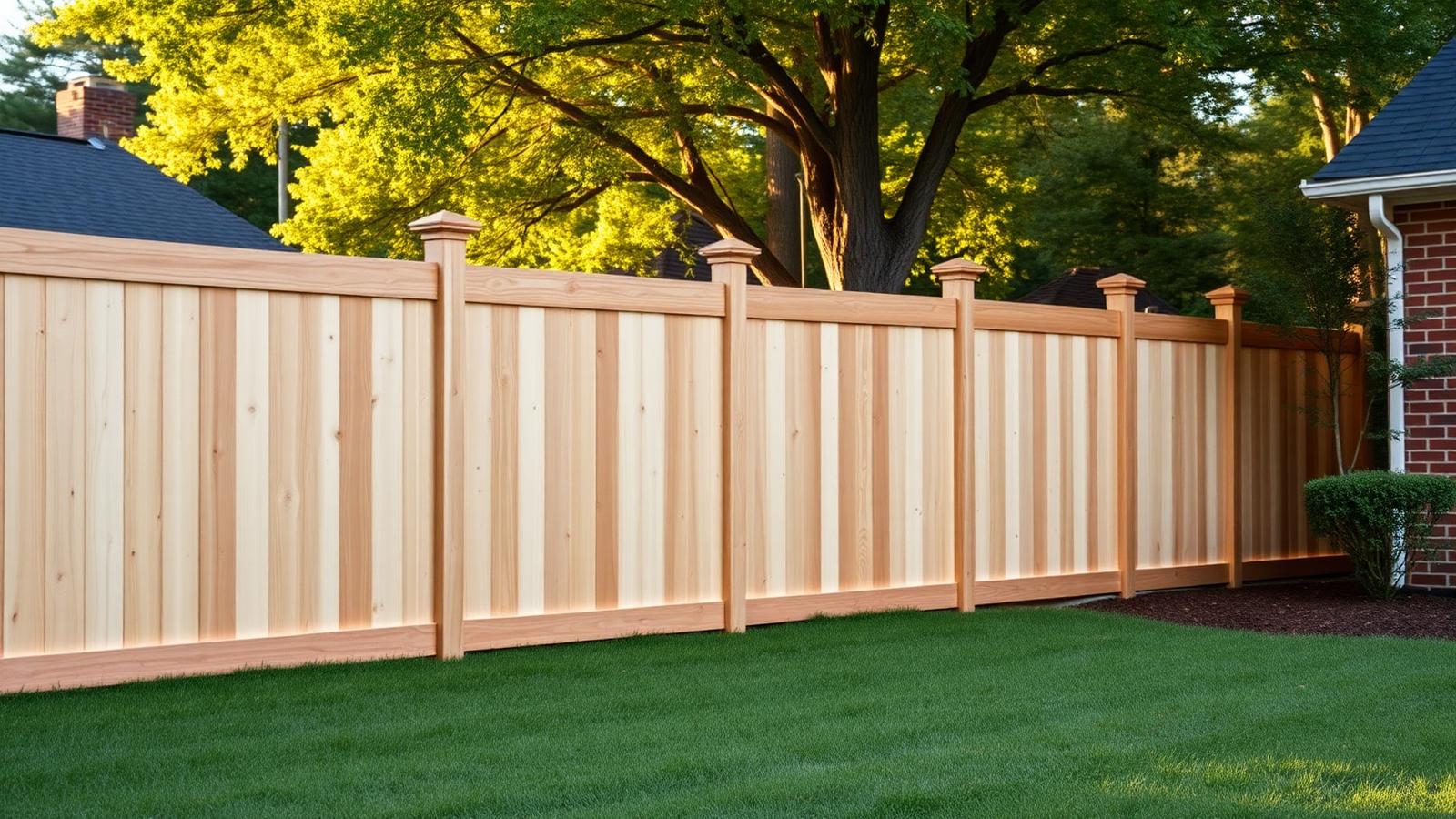
When a fence contractor in Alpharetta says "cedar," what is usually on the truck is western red cedar — kiln-dried, S4S, in 1x6x6 dog-ear or square-top picket profiles. Western red is the gold standard for wood privacy fence installation: naturally rot-resistant, low in tannins that bleed through stain, and dimensionally stable enough to hold straight in our humidity swings. Eastern red cedar is the regional alternative — locally milled, cheaper, but knottier and prone to checking.
When budget is tight and the fence is in full sun, eastern red is a reasonable pick. When the fence is the front yard of a $700k home in Country Club of the South, the contractor we match you with stay on western red.
Pressure-treated pine — the workhorse
Pressure-treated southern yellow pine is what holds up the cedar. Every wood fence installation the network does in Alpharetta uses ground-contact pressure-treated 4x4 posts even when the pickets are cedar — because the post is the part that lives wet, in red clay, eight inches below grade. A cedar post will rot in three to five Georgia winters; a ground-contact pressure-treated post lasts 20-plus.
If the entire fence is pressure-treated pine — pickets, rails, and posts — you are looking at the most cost-effective wood fence installation a fence contractor can build. Expect to budget roughly 25 to 35 percent less than a cedar build for the same linear footage.
How each one ages in Alpharetta humidity
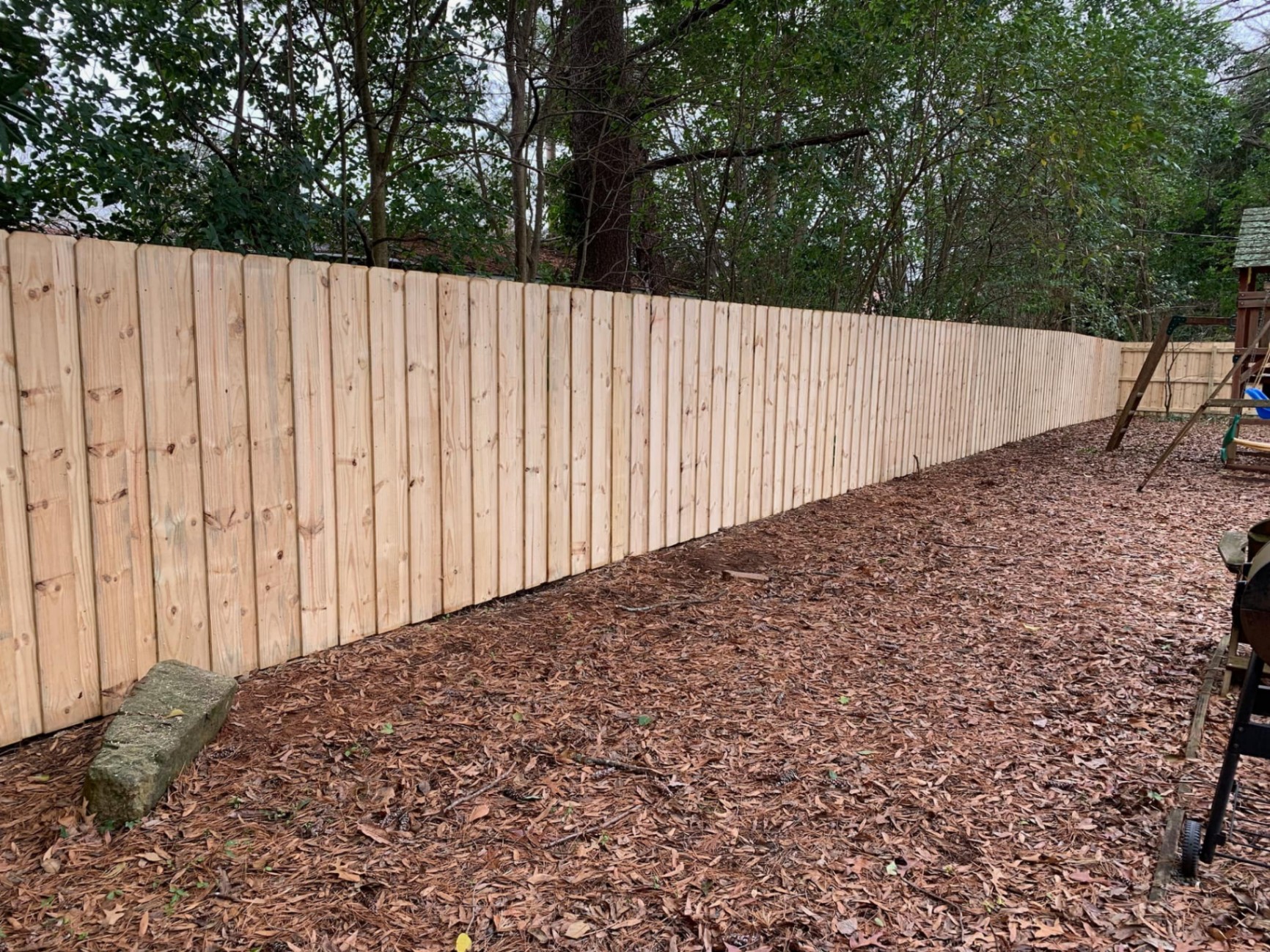
Alpharetta sits in a humid subtropical zone with 50-plus inches of annual rainfall and long stretches of 80-degree mornings with dew on the grass. Pressure-treated pine, left unsealed, will silver to a soft gray in 12 to 18 months — and check (split along the grain) noticeably by year three. Cedar silvers slower, checks less, and accepts stain more evenly.
With a transparent oil sealer applied two to three months after install (so the wood can dry past 20 percent moisture content first), both materials hold tight for 15 years or more. Without sealer, cedar still wins on appearance — but the structural difference between sealed and unsealed cedar is small. The structural difference on pressure-treated is real.
Cost reality for an Alpharetta fence installation
On a typical 200-foot 6-foot privacy fence installation in Alpharetta, the cedar premium runs roughly $19 to $28 per linear foot over an all-pressure-treated build, depending on grade and gate count. On a 300-foot Country Club of the South lot that is real money — $5,700 to $8,400 of additional spend. On a 60-foot side-yard run inside a Crabapple infill, the delta is closer to a long weekend's worth of spend than a coffee budget.
The fence contractor we match you with gives you both numbers in writing on the estimate so you can decide based on the actual delta, not a percentage.
HOA realities in Alpharetta neighborhoods
Active HOAs across Alpharetta — Windward, Country Club of the South, White Columns, the Crabapple subdivisions — usually allow both cedar and pressure-treated, but most require a stain or sealer to be applied within a defined window after install (often 90 days). A few specifically prohibit unsealed pressure-treated because of the green-then-silver appearance during the cure period. A fence contractor who has worked the neighborhood will know which committee allows what; the contractor we match you with submit the HOA architectural review packet on your behalf as part of every Alpharetta job.
When cedar is worth the premium — and when it isn't
Cedar is the right call when the fence is the front face of the property, when you want to leave it natural and unsealed, and when a 20-year hold is on the table. Pressure-treated pine is the right call when the fence is a back-yard pet enclosure, when you plan to stain it solid color anyway (which hides the underlying species), or when budget is the gating constraint on getting the fence installed at all. Either way, post-set, hardware grade, and concrete volume matter more to how long the fence lasts than which species the pickets are.
A cedar fence built on shallow-set posts with electroplated screws will fail before a pressure-treated fence built on 36-inch-deep concrete-set posts with hot-dipped ring-shank nails. The fence contractor builds the fence — not the lumber yard.
Frequently Asked Questions
Does cedar really last longer than pressure-treated pine?
For pickets and rails, yes — modestly. Cedar checks less and silvers more evenly. For posts, no — ground-contact pressure-treated outlasts cedar in red clay by a wide margin, which is why every Alpharetta fence contractor in our network uses pressure-treated posts even on cedar fence builds.
Will my Alpharetta HOA approve a pressure-treated fence?
Most do, with a stain or sealer required within a defined window after installation. A few explicitly require cedar or stained pressure-treated. Your fence contractor will check the covenants and submit the architectural review packet for you as part of the fence installation.
Should I stain my new wood fence?
Yes — but wait two to three months after installation so the wood can dry to under 20 percent moisture content. A transparent oil-based sealer applied at that point doubles the appearance lifespan of cedar and substantially extends the structural life of pressure-treated pine.